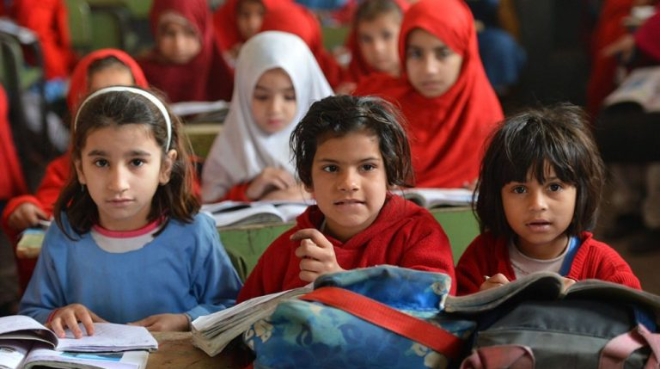
The Government of Punjab has taken a significant step towards preserving regional identity by announcing plans to promote the Punjabi language in schools across the province. For decades, Punjabi has remained the everyday language of millions, yet it has seldom been given a formal space in classrooms. This new initiative aims to bridge that gap and ensure that children grow up confident in both their cultural roots and academic abilities.
According to officials, the policy will introduce Punjabi as a structured subject in selected grades, gradually expanding it across the school system. The government believes that students learn best when the foundation of education is linked to their mother tongue. By using Punjabi at various levels, especially in early schooling, children may find it easier to grasp basic concepts and build stronger literacy skills.
Educators have long argued that a child’s first language should not be sidelined in favour of languages they encounter later in life. They point out that countries around the world embrace mother-tongue education to improve learning outcomes, cultural pride, and emotional development. Punjab’s new policy aligns with this international practice, while also recognising the richness of Punjabi literature, history, and heritage.
Parents and teachers have welcomed the move with cautious optimism. Many appreciate the effort to preserve Punjabi identity, which has been overshadowed by the dominance of Urdu and English in formal education. However, some have raised concerns regarding training for teachers, availability of quality textbooks, and the need to ensure that the policy strengthens — rather than complicates — the academic journey of students.
The government has assured stakeholders that implementation will be gradual and supported by proper planning. Training programmes for teachers, development of modern learning materials, and consultation with linguists are expected to form part of the rollout. Officials emphasise that the policy is not meant to replace Urdu or English, but to complement them by giving students a stronger linguistic foundation.
If carried out effectively, this initiative could mark a turning point for regional language preservation in Pakistan. Punjabi, spoken by the majority of the province’s population, deserves recognition not only as a cultural asset but as an educational resource. Promoting it in schools may help children connect more deeply with their identity while improving their overall academic confidence.
The renewed focus on Punjabi signals a broader vision: education rooted in culture, accessible to all, and reflective of the people it serves. For many in Punjab, this is not just a policy change — it is a moment of reclaiming pride in a language that has shaped generations.